



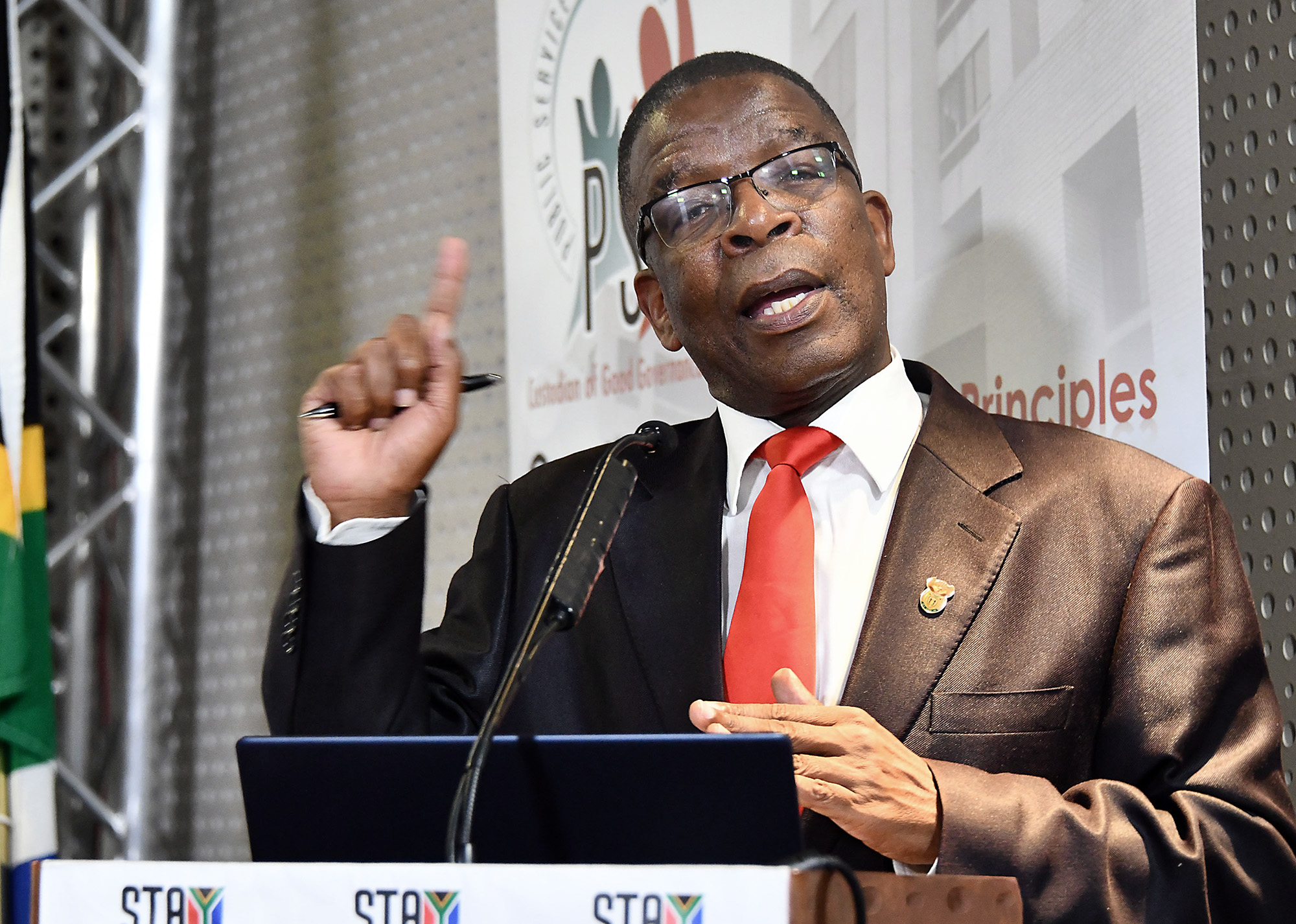
“Although there have been improvements in most of the departments, certain departments continue to default on this matter,” said Michael Seloane, the Public Service Commission’s (PSC) Gauteng commissioner.
The PSC has been monitoring the 30-day payment of suppliers by government departments since 2016, and in this time has held engagements with departments that continuously default on payments.
Titled Pulse of the Public Service, the bulletin shows an overall decline in the number of invoices paid after 30 days during the 2019/20 financial year in comparison with the 2017/28 financial year.
In the fourth quarter of the 2019/20 financial year, the number of invoices paid after 30 days stood at 37 749 while for quarter four of the 2017/18 financial year there were 55,334 unpaid invoices.
The bulletin also recorded improvements in the number of invoices that are older than 30 days and are unpaid.
During the 2019/20 financial year, as at the end of March 2020, 328 invoices were not paid. A much lower figure as compared to the figures during the 2017/18 financial year, when at the end of March then there were 14,746 unpaid invoices.
While the commission lauded these improvements during a briefing announcing results of the bulletin on Tuesday, 15 September, Seloane said some departments are still defaulting.
“Despite some improvements within the public service, there are still challenges experienced with repeat defaulting national departments and provinces”.
The Department of Water and Sanitation and its trading entity both had the most unpaid invoices. Although they only provided data for the first two months of quarter 1, this shows that at the end of May of the 2019/2020 financial year, 136 invoiced at the cost of R506-million were not paid.
The Water Trading Entity (WTE) had 665 unpaid invoices at the cost of R991-million as at the end of June.
The department of Public Works and Infrastructure (DPWI) and its Property Management Trading Entity (PMTE) both had invoices 1 646 at the cost of over R64-million outstanding.
The Department of Cooperative Governance had nine unpaid invoices at a cost of R1-billion.
The commission chastised the Department of Women, Youth and Children with Disabilities, in what it called “gross negligence” over the none payment of one invoice at a cost of over R1-million for the last 18 months.
On the provincial level, Eastern Cape, Free State, Gauteng, North-West and Northern Cape have the highest number of invoices older than 30 days and not paid.
As of June 2020, 13 878 invoices amounting to R2.3-billion were not paid in the Eastern Cape.
The Citizen previously reported that 10 of the 14 departments in the province experienced challenges in timeously paying suppliers.
The PSA is also mandated to handle complaints and grievances in the public sector, and noted that of the 3 653 cases of alleged corruption received from between 2017/18-2020/21 financial years, social grant fraud recorded the highest number of cases at 2,400.
While in the 2019/20 financial year, social grant fraud dominates as it accounts for 1 007 of the cases received.
On 2 September, in a first special report on government’s financial management of Covid-19 relief funds, Auditor-General Kimi Makwetu revealed that data analytics used by his office to scrutinise records of the four million people in the database for the Covid-19 relief grant found that over 30 000 beneficiaries needed further investigation.
Furthermore, the AG found that the grant was paid to people who are not in distress and there was limited verification of whether applicants were receiving additional income during the application process.
Seloane could not ascertain whether there is an increase in public service corruption.
“There’s a number of cases, some with the Hawks and SIU, and we are still finding others in all the provinces and national government. So I cannot say corruption as a whole has increased or decreased, but the perception has increased and there is an upward movement in the cases of corruption cases reported.
“This is an indicator that emergency regulations are challenging government and the country must tighten them.” DM
This article is more than 5 years old
South Africa
Government getting better at paying suppliers on time but some departments still owe billions
Government’s culture of not paying suppliers on time is shifting. This is according to the Public Service Commission’s quarterly bulletin on governance matters in the public service sector. However, this shift does not discount the fact that some government departments still default on the 30-day payment period.
Comments
Scroll down to load comments...