



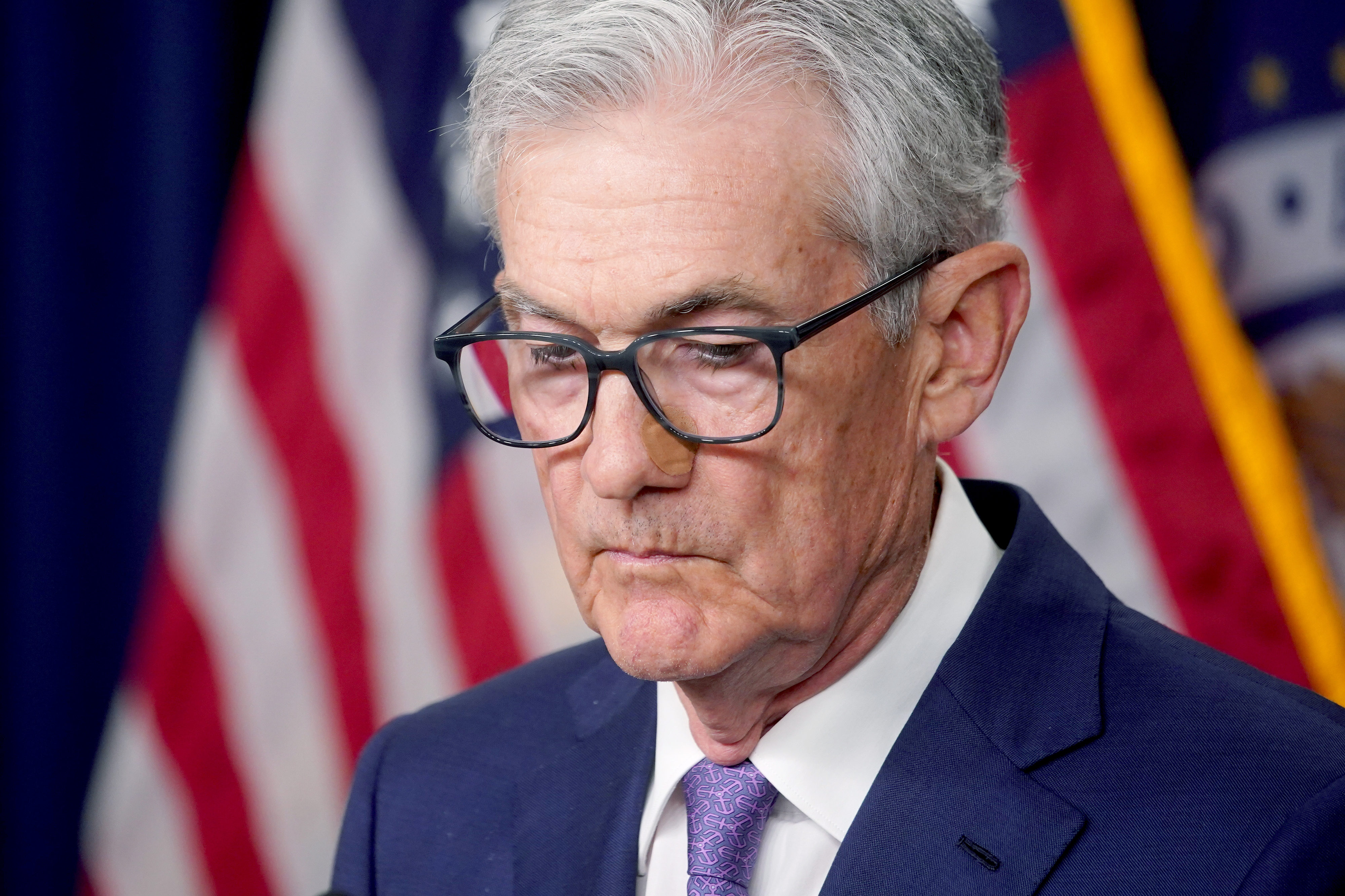
Powell said regulators are close to agreeing to change their plan to force big banks to hold significantly more capital - a major win for Wall Street lenders. The overhaul is tied to Basel III, an international accord that followed the 2008 financial crisis and is intended to prevent bank failures and another crunch.
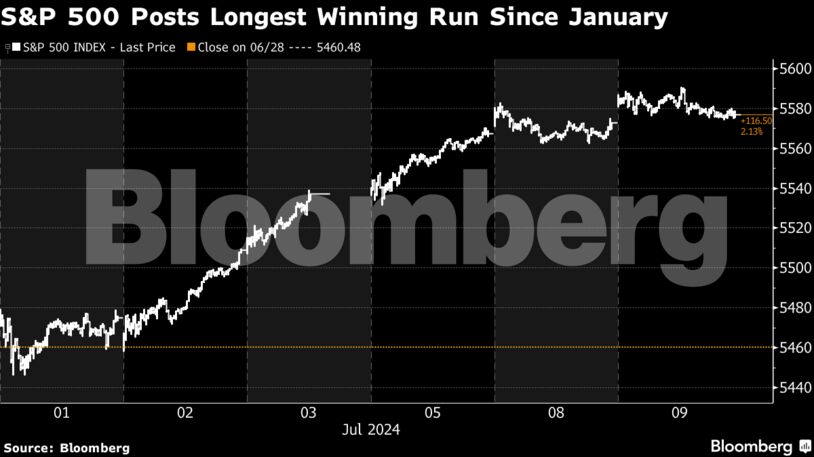
The S&P 500 hit its 36th record this year. JPMorgan Chase & Co., Citigroup Inc. and Wells Fargo & Co. climbed. Tesla Inc. and Nvidia Corp. led megacaps higher. Oracle Corp. sank as Elon Musk said his artificial-intelligence startup would rely less on cloud technology from the software maker.
Treasuries pared losses after a solid $58 billion sale of three-year notes, though a rout in European bonds kept a lid on the market. Swap traders continued to project two rate cuts in 2024.
Wall Street’s Reaction to Powell:
Jay Powell is maintaining his more balanced view on the economic outlook and the two mandates they focus on — but with a window towards easing. I’m becoming more confident that the Fed cuts in September.
While some might have been hoping for a stronger rate-cut signal, we read his comments in particular on the evolving balance of risks as dovish and see him as continuing to lay the foundations for a potential September cut provided incoming data – in particular Thursday’s inflation report – sustain and support the Fed’s evolving assessment.
Powell was a lot more neutral than the market was anticipating. We expect similar testimony tomorrow, with a big potential move in rates after CPI Thursday.
The US rates market bear-steepened in a move that was more about a supply concession than anything Powell said (or didn’t say).
The Chair stuck to the script. The market shrugged off any slightly dovish skew and quickly shifted focus to the looming supply – with a nod to the fact a greater curve concession could be on offer.
Chairman Powell acknowledged that keeping interest rates elevated for too long could jeopardize the economy and the labor market, which may have cheered investors eager for the Fed to cut rates. But he also repeated his mantra that the Fed is still waiting for more evidence that inflation is cooling reliably before it acts.
Powell keeps the ship steady. Chair Powell’s prepared testimony struck a balanced tone.
September remains modal, if notably more tentative than priced currently. But with the Fed balancing risks, upside surprises to labor market or inflation data could delay the first cut.
Powell leaves all options open.
The neutral tone of the opening statement seems at odds with the softer tone of the recent activity data, so our sense is that a September interest rate cut remains very much in play.
Treasury Secretary Janet Yellen said the labor market is no longer driving inflation in the US economy to the extent it was earlier in the pandemic recovery, echoing earlier comments by Powell.
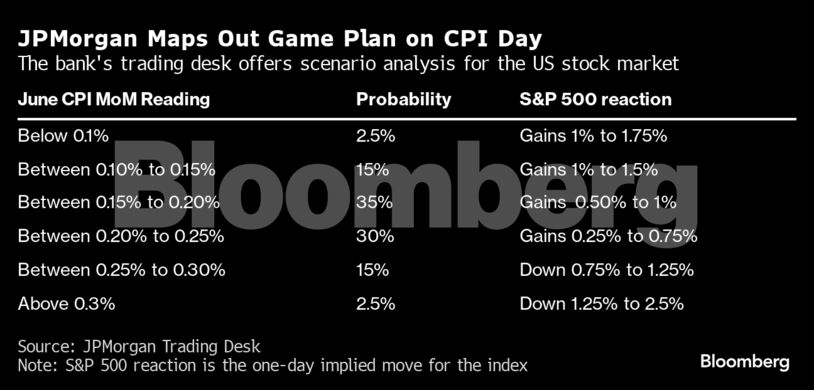
Investors should brace themselves for a bout of stock market volatility this week after a lengthy period of calm, based on a warning from JPMorgan Chase & Co.’s trading desk.
The options market is betting the S&P 500 will move by 0.9% in either direction by Thursday, based on the price of at-the-money straddles expiring that day, according to Andrew Tyler, the trading desk’s head of US market intelligence. The latest consumer price index will be reported prior to that session, which could trigger a move with traders betting on easing inflation driving the Fed to cut interest rates twice in 2024.
Risk-taking traders are keeping a close eye on a heuristic recession indicator known as the Sahm rule after the latest jobs data.
The rule was conceived just a few years ago in 2019, but it has accurately indicated the start of a recession since 1970. With US stocks hovering near all-time highs and traders eyeing rate cuts this year, the prospects of a recession has tapered off as hopes for a soft-landing mount. But any sign of cracks in the labor market could challenge that confidence, forcing traders to reconsider their positions.
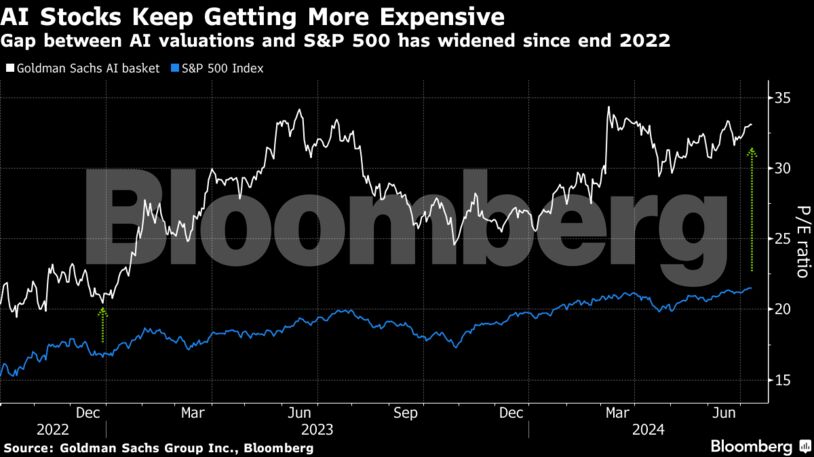
Wall Street has tilted toward the tech sector to a historic degree, raising the stakes should the artificial intelligence-fueled rally falter. Valuations are stretched, while earnings growth is poised to slow from here.
That adds to uncertainty for investors betting that Big Tech’s rally will continue, according to Lisa Shalett at Morgan Stanley’s wealth management unit, who warns of “stretched momentum, weak breadth and complacency” in the market.
The rally in artificial-intelligence stocks may show little sign of flagging, but a historical review suggests it’s time to take profit in the biggest names, according to strategists at Citigroup Inc. led by Drew Pettit. Sentiment toward AI-exposed equities is the strongest since 2019 and free cash flow at the bulk of those firms is forecast to outstrip analyst expectations, they said.
Corporate Highlights:
Subscribe to the new S&P 500 sector wrap
For a breakdown of sector performance in the S&P 500 every day after the closing bell, please see the new S&P 500 Sector Wrap.
Key events this week:
Some of the main moves in markets:
Stocks
Currencies
Cryptocurrencies
Bonds
Commodities
This article is more than a year old
Newsdeck
S&P 500 Holds Gains as Fed Bets Steady on Powel
Stocks closed at all-time highs, with Jerome Powell’s remarks to Congress doing little to alter bets the Federal Reserve will be able to cut interest rates this year.
Comments
Scroll down to load comments...